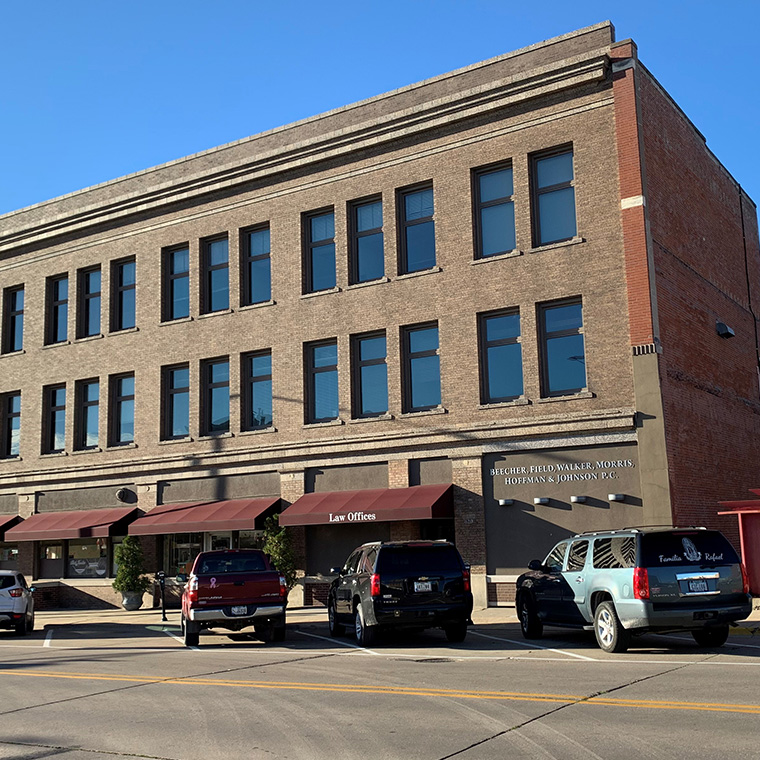
Retirement Planning Lawyer in Waterloo
Legal Planning To Support the Retirement You Have Worked For
As you move toward retirement, your questions start to shift. Instead of asking how to earn and build, you begin asking how to simplify, protect, and pass on what you have built. A retirement planning attorney can help you turn those questions into a clear legal plan that supports your lifestyle and your family.
At Beecher, Field, Walker, Morris, Hoffman & Johnson, PC, we work with individuals and couples who call Waterloo and the Cedar Valley home and who want their retirement years to feel organized rather than uncertain. Our attorneys bring together estate planning, probate, real estate, and corporate law so that your legal documents match your real life, not a generic template.
Our firm has served clients from downtown Waterloo since 1918. For more than a century, families and business owners in Northeast Iowa have trusted us to handle the legal side of major life transitions, including the move into retirement.
Take the first step toward resolving your case with a skilled retirement planning attorney. Reach out or call (855) 801-1633 now to set up your consultation.
Thoughtful Retirement Planning With Deep Roots in Waterloo
Retirement planning is about more than investment accounts. It is about deciding who can make decisions for you if you are ill, how your home and property will be handled, and how to avoid unnecessary stress for your family. Thoughtful planning connects your goals with the legal tools that support them.
Our firm has been based in downtown Waterloo for over 100 years, serving the Cedar Valley and the broader Northeast Iowa region. That history matters for retirement planning, because you are choosing advisers you may work with for the rest of your life, and that your family may turn to after you are gone. We are not a new name in town. We are an institution that has grown alongside the community.
Over the decades, we have helped generations of Waterloo area families address the same core questions you may be considering now. How should ownership of the family home be structured? What is the best way to pass a farmland or rental property? How can a surviving spouse stay financially secure? Our attorneys draw on a deep understanding of Iowa law and local practices, including how estates typically move through the Black Hawk County court system.
Our legacy also includes four attorneys from our firm being appointed to judgeships, including one to the Iowa Supreme Court. That kind of trust from the legal community reflects the level of judgment and professionalism we strive to bring to every retirement planning engagement.
Why Work With Our Retirement Planning Lawyers in Waterloo
Many people begin searching for a retirement planning lawyer when they realize their situation is more complex than a basic form can address. They may own multiple properties, a closely held business, or a farm. They may have a blended family, children with very different financial situations, or a family member with a disability. Our firm is built to handle these kinds of realities.
We have a team of 14 attorneys in our Waterloo office who focus on foundational areas like estate planning, probate, corporate law, real estate, and civil litigation. That breadth allows us to look beyond a single document and consider the wider picture. For example, when we discuss how to leave a rental property or family farm, we can draw on our real estate practice to anticipate title, transfer, and lending issues that may arise later.
When a client is preparing to retire from a business they own, our corporate attorneys help address governance, ownership, and buyout questions that often arise at the same time as personal retirement decisions. This coordinated approach can help avoid gaps between your business exit plan and your personal estate and retirement planning.
Our attorneys have earned recognitions such as AV Preeminent Peer Review Ratings from Martindale Hubbell and Super Lawyers designations. These distinctions come from other lawyers and judges who have seen our work and reflect our commitment to high professional standards. Combined with a Client's First philosophy, where we focus on your goals and your best interests, this gives many of our retirement clients confidence that they are in capable and careful hands.
Key Legal Pieces Of A Solid Retirement Plan
As you think about retirement, it can be helpful to understand the main legal building blocks that support a complete plan. The right combination for you will depend on your assets, family situation, health, and priorities, but the concepts stay fairly consistent.
Wills & Trusts
A will is often the starting point. It directs how property that passes through your estate is distributed and who will handle your affairs after death. In Iowa, if you die without a valid will, state law determines who receives your property, which may not reflect your wishes, especially in blended families or where there is no surviving spouse.
Trusts can be used to manage assets during life and after death in ways a will alone cannot. Some people use revocable living trusts to provide continuity if they become incapacitated and to guide distributions to beneficiaries over time. Others may need more tailored arrangements for minor children, beneficiaries with disabilities, or situations where they want to protect an inheritance from certain risks. Our attorneys help you decide whether a trust fits your goals or whether a well-drafted will and beneficiary structure is sufficient.
Beneficiary Designations & Nonprobate Assets
Beneficiary designations on retirement accounts and life insurance are another crucial piece. These designations usually control who receives these assets, even if your will says something different. Part of our work is to review your existing designations and suggest updates so that your overall plan is consistent and nothing is left to chance.
Powers Of Attorney & Healthcare Directives
Powers of Attorney and healthcare directives are key for incapacity planning. A financial power of attorney can authorize someone you trust to handle banking, property, and legal matters if you cannot act for yourself. Healthcare directives and healthcare powers of attorney allow you to express your wishes about medical treatment and appoint someone to make decisions if you are unable to do so. This kind of planning can be especially important in retirement, when health considerations become more pressing.
We also pay close attention to situations where disability intersects with retirement. Because our firm maintains a strong Social Security Disability practice, we understand how disability benefits, retirement timing, and estate decisions can influence one another. That perspective can be helpful if you or a loved one has a current or potential disability claim that may affect retirement choices.
How Our Retirement Planning Process Works
Many clients tell us that the most intimidating part of retirement planning is simply not knowing where to start. Our goal is to provide a clear, orderly process that replaces uncertainty with concrete steps.
Your First Meeting
Your work with us typically begins with a conversation. In that first meeting, we ask about your family, your assets, any businesses or properties you own, your health, and what you hope retirement will look like. You do not need to have everything perfectly organized. We encourage you to bring what you have, such as a list of accounts, existing wills or powers of attorney, and information about real estate and insurance.
Designing Your Plan
After we understand your situation, we discuss the legal tools that might fit your goals. This may include updates or replacements of existing documents, new powers of attorney, trusts, or planning for specific assets like a business interest or farmland. We explain the advantages and potential tradeoffs of each option in straightforward language so that you can make informed decisions.
Drafting, Signing & Follow Up
Once a direction is chosen, our attorneys draft your documents and then review them with you carefully. We walk through the meaning of key provisions and answer questions before anything is signed. When you are comfortable, we coordinate proper signing and, where needed, assist with related actions such as retitling assets or updating beneficiary designations.
Retirement planning is not a one-time event. As your life changes, your plan may need to adjust. Our firm’s long history in Waterloo means we are well-positioned to help you revisit your documents after major events like a move, a marriage, a divorce, the birth of a grandchild, or the sale of a business. We encourage clients to see retirement planning as an ongoing relationship, not a stack of papers that never changes.
Retirement Planning For Business Owners & Farmers
Owning a business or farm often adds a layer of complexity to retirement planning. You may be deciding whether to sell, wind down, or transfer your interest to family members or key employees. These decisions have legal, tax, and family implications that reach far beyond a typical retirement account.
In the Waterloo and Cedar Valley area, many of our clients are long-time small business owners or farmers whose operations are closely tied to their identity and family history. Some hope to keep the business or farm in the family. Others feel a responsibility to treat all children fairly, including those who are not involved in the day-to-day work. Our attorneys help you think through these choices in a practical way.
Drawing on our corporate law practice, we can address issues such as ownership structure, buy-sell arrangements, voting rights, and succession planning for closely held companies. For farms and other real estate-heavy operations, our real estate attorneys help plan how land and related interests may be conveyed over time, whether through lifetime transfers, trusts, or estate planning tools.
Because our firm has been serving Northeast Iowa businesses and agricultural families for many decades, we are familiar with the common patterns and challenges that arise. We work to craft plans that are realistic for your family, and that can be administered effectively under Iowa law and in local courts if necessary.
Planning For Incapacity and Long Term Care
Retirement planning is not only about what happens after death. Many clients are equally concerned about what will happen if they live a long time but face illness, cognitive decline, or other conditions that make it difficult to manage daily affairs.
A comprehensive plan includes clear instructions and authority for this stage of life. Financial powers of attorney can empower someone you trust to manage bank accounts, pay bills, work with financial professionals, and handle legal matters if you cannot. Healthcare powers of attorney and living wills allow you to appoint decision makers and express your preferences about medical treatment and end-of-life care.
These documents can reduce the likelihood that your family will need to seek court-appointed guardianship or conservatorship through the Black Hawk County courts if you become unable to act on your own. While court oversight is sometimes necessary, careful planning can simplify the process and provide more privacy and flexibility.
Long-term care needs can also influence retirement planning. While we do not control the costs of care or the rules for public benefit programs, we help clients consider how potential care needs might affect their financial and estate planning decisions. Our attorneys discuss planning approaches that may support a spouse or family member if one person requires significant care, always within the bounds of current law and with an eye on practical realities in Northeast Iowa.
Get the help you need from an experienced retirement planning lawyer. Fill out our online form without delay.
Frequently Asked Questions
When Should I Start Working With A Retirement Planning Attorney?
It is generally helpful to start working with a retirement planning attorney well before you stop working, but planning can add value at almost any stage. Many clients in Waterloo first reach out in their fifties or early sixties, when retirement feels close enough to plan for, but there is still time to make thoughtful decisions. Others come to us shortly after a major life event, such as a health issue, a business sale, or the death of a spouse.
We tailor our guidance to where you are now. If you are years away from leaving work, we might focus on big picture structure and flexibility. If you are already retired, we pay particular attention to protecting a spouse, preparing for incapacity, and simplifying your affairs. Because our firm has been in practice for more than a century, we are comfortable meeting you at whatever stage you find yourself and adjusting your plan over time.
What Should I Bring To My First Retirement Planning Meeting?
For your first meeting, it is helpful to bring a general list of your assets and accounts, including retirement plans, bank accounts, investment accounts, life insurance policies, and any significant debts. Documents such as existing wills, trusts, or powers of attorney are also useful, even if you think they are out of date. If you own real estate, bringing copies of deeds or tax statements can help us understand how the property is titled.
You do not need to have every detail perfect before we talk. Our attorneys are used to working with incomplete information and will help you identify what additional documents or details to gather after the initial conversation. The most valuable things you can bring are your questions, your concerns about family members, and your goals for retirement and beyond. We use that information to shape recommendations that fit your situation rather than forcing you into a one-size plan.
How Do You Coordinate My Will, Trust, and Retirement Accounts?
One of the most important parts of retirement planning is making sure your will, any trusts you create, and your retirement and insurance beneficiary designations are all pointing in the same direction. During our work together, we review your existing documents and account designations to look for conflicts or gaps. For example, we may suggest changes if your will directs assets to certain people or a trust, but your retirement account still names a former spouse or an outdated beneficiary.
We then help you design a structure where each piece has a clear role. Your will might cover personal property, real estate, and any assets that do not have beneficiary designations. A trust, if appropriate, might hold certain assets for management and distribution over time. Your retirement and insurance beneficiary designations can be updated to support that plan, either by naming individuals directly or, in some cases, by naming a trust. Our goal is that each document and designation works together rather than at cross purposes.
Can You Help With Planning For My Business Or Farm In Retirement?
We frequently work with business owners and farmers in Waterloo and across Northeast Iowa who are planning for retirement. These clients often face questions about whether to keep a business or farm in the family, sell it to a third party, or transition it to a key employee or partner. Each approach has different legal and practical implications.
Our corporate and real estate attorneys collaborate with our estate planning team to address the full picture. That can include reviewing operating agreements or corporate documents, planning for gradual ownership transitions, and considering how land and equipment will be handled. We also discuss how any sale or transfer will affect your broader retirement and estate plan, including how to treat children who are active in the business differently from those who are not, while still striving for a sense of fairness within the family.
How Often Should I Update My Retirement and Estate Plan?
As a general guideline, many clients benefit from reviewing their retirement and estate plan every few years or after any major change in their life, finances, or family. Events that often prompt an update include marriage, divorce, the birth or adoption of a child or grandchild, a significant change in assets, the sale of a business or farm, or a major change in health. Changes in relevant laws can also be a reason to revisit your documents.
Because our firm has been a constant presence in Waterloo for more than a century, we are well-equipped to provide ongoing support. When you meet with us for an update, we look at your current documents and discuss what has changed in your life since they were signed. We then suggest targeted adjustments rather than starting from scratch unless your goals have shifted dramatically. This approach helps keep your plan aligned with your current situation without making the process heavier than it needs to be.
What Happens If I Become Unable To Manage My Finances Or Healthcare?
If you become unable to manage your finances or healthcare, what happens next depends heavily on the planning you have done in advance. With properly executed financial and healthcare powers of attorney, the individuals you choose can usually step in to make decisions and handle matters for you without needing to seek a formal court appointment. This can simplify things for your family and provide more continuity.
If you have not put these documents in place and you lose capacity, your family may need to ask the Black Hawk County court to appoint a guardian or conservator. That process offers safeguards but can be time-consuming and public, and the court will decide who is appointed. Through retirement planning, we work with you to reduce the likelihood of that outcome by creating clear, legally recognized documents that reflect your preferences while you are still able to do so.
Do You Work With Clients Outside Waterloo and The Cedar Valley?
Yes, our attorneys work with clients throughout Northeast Iowa, including communities beyond Waterloo and the immediate Cedar Valley. Many clients travel to our downtown Waterloo office for in-person meetings, and we also use phone and other communication tools to make planning accessible for those who live farther away or have mobility or health limitations.
Because our firm has long served the region, we are familiar with how estates and related matters are handled in area courts and with the kinds of assets people in this part of Iowa tend to own. Whether you live in Waterloo or elsewhere in Northeast Iowa, we approach your retirement planning with the same focus on clarity, practicality, and long-term relationship.
Our knowledgeable retirement planning attorney is prepared to guide you. Call (855) 801-1633 to book your initial consultation without delay.

Why Choose Beecher, Field, Walker, Morris, Hoffman & Johnson, PC?
-
Aggressive Representation
We do what it takes to win and don't hold anything back. Attorney Field is prepared to fight for you.
-
Clients First
We will always put your and your best interests first. Our clients are always our top priority.
-
Decades of Experience
Attorney Hugh Field has practiced law for over 50 years and is well respected in the legal community.
Talk With Our Team About Your Retirement Plan
Planning for retirement involves more than choosing a date to stop working. It involves deciding how you want your property managed, who you trust with important decisions, and what you hope to leave for the people and causes that matter to you. Working with an experienced retirement planning attorney in Waterloo, whom residents have turned to for generations, can make those decisions clearer and less stressful.
At Beecher, Field, Walker, Morris, Hoffman & Johnson, PC, we combine a century of continuous service in downtown Waterloo with a full team of attorneys who focus on the areas of law that shape retirement and estate planning. We take the time to listen, explain your options in plain language, and craft documents that reflect your goals and your family. Whether you are just starting to think about retirement or are already well into that stage of life, we are ready to help you put a thoughtful legal plan in place.
To schedule a conversation about your retirement and estate planning goals, call (855) 801-1633. to speak with a skilled retirement planning attorney in Waterloo.